
My cart



MiniFinder’s proprietary systems use smart technology and real-time features to enhance safety, security, and control in everyday life.
Our Categories
Selected Products
MiniFinder’s proprietary systems use smart technology and real-time features to enhance safety, security, and control in everyday life.
Our Categories
Selected Products

Keeping a mileage log for a company car or benefit car is important, not only in case the Swedish Tax Agency asks for documentation, but also so that you as an employer can see how the vehicle was used on a particular date. Was a 200 km journey private or business-related? Where did the driver go, and what was the purpose of the trip?
These details can quickly become difficult to remember afterwards, while also affecting areas such as the taxable benefit value, fuel costs and reimbursement. That is why it is important to record journeys correctly from the start and have clear documentation of company mileage when it is needed.
When recording private and business mileage, it is not always obvious which category a journey falls into. Keeping the two separate is important, particularly for employers who need to account for fuel costs and any taxable benefits.
A common example is the journey between home and your regular workplace. If you take the company car from home in the morning, drive to your usual workplace and then drive home again after work, this is normally considered private travel.
The situation can be different if you drive directly from home to visit a customer and then continue to your workplace. That journey may be considered business travel. This is why the mileage log should clearly show where the journey started, where you travelled and the purpose of the trip.
It is easy to think you can fill in the mileage log later, but after only a few days it can be difficult to remember exactly what happened on a particular journey. Which customer did you visit? Why did you drive that route? Did you make a private stop along the way?
The longer you wait, the greater the risk of journeys being forgotten or recorded incorrectly. A mileage log should therefore be kept up to date, with each journey recorded as it happens. An electronic mileage log can record journeys automatically, so you don't have to reconstruct several weeks of driving afterwards.This saves you from having to reconstruct several weeks of driving afterwards.
When a vehicle is used for business purposes, it is important to document the mileage correctly. For example, say an employee has driven 30,000 kilometres for business during the year. If the mileage log does not show where the employee travelled and how far, it becomes difficult to demonstrate that those kilometres were actually driven for business purposes.
This can also have financial implications. If an employee drives at least 30,000 kilometres for business in a benefit car during a calendar year, the taxable benefit value can be reduced to 75% of its full value. You therefore need to be able to show that the vehicle was actually driven that distance for business purposes, making the mileage log an important part of the documentation.
Mileage reimbursement also depends on the type of vehicle being used. Different standard rates apply to business travel using a privately owned car and a benefit car, so the mileage log needs to clearly show which journeys were made for business and how far you actually drove.
If you have access to your employer's car but are not supposed to be taxed for a car benefit, you also need to keep track of how much the vehicle is used privately.
For private use to be considered only of minor extent, the vehicle may be used privately on no more than 10 occasions per calendar year and for no more than 1,000 kilometres in total. Both limits must be met.
This means you could drive 800 kilometres privately and still exceed the limit if the car was used privately on 11 occasions. Likewise, using the car on only eight occasions is not enough if your total private mileage reaches 1,100 kilometres.
Here, the mileage log provides important documentation for separating business journeys from private ones and showing how the vehicle has actually been used throughout the year.
The best way to avoid these problems is to record company journeys as they happen and make sure everyone who uses a company vehicle knows how their mileage should be reported.
It is also important to clearly separate private and business travel. This makes it easier to handle reimbursements and benefits, while also helping you keep track of limits such as the 10 occasions and 1,000 kilometres of private use.
If you keep a mileage log manually, every journey needs to be documented and the records kept up to date. An alternative is an electronic mileage log that records journeys automatically and reduces the risk of a trip being forgotten.
The main advantage of an electronic mileage log is that you do not have to rely on memory. Journeys are recorded automatically when the vehicle is used, so you do not have to try to remember several days or weeks later where the vehicle was driven.
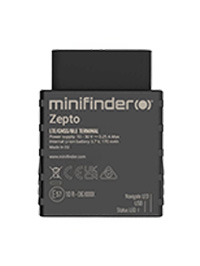
With MiniFinder Triplog, the company gets a complete record of its journeys and can separate private trips from business trips. This makes things easier for both the person driving the vehicle and the company that later needs to manage and report the information.
For companies with several vehicles or drivers, it also becomes easier to get an overview of mileage without having to collect manual mileage logs from every driver. This reduces the risk of journeys being missing when the documentation is eventually needed.
Not sure what information your mileage log should contain or what the Swedish Tax Agency recommends? Read our guide to company car and mileage log rules.


Visit our contact page.